Personal AI
Personal context should be useful only when the person has chosen to provide it. eDrive explores how files, photos and documents can become searchable without pretending permission is a footnote.
Explore personal AI →We are not trying to put a chatbot in every corner of eFind. We are trying to make the things people already came to do a little easier.
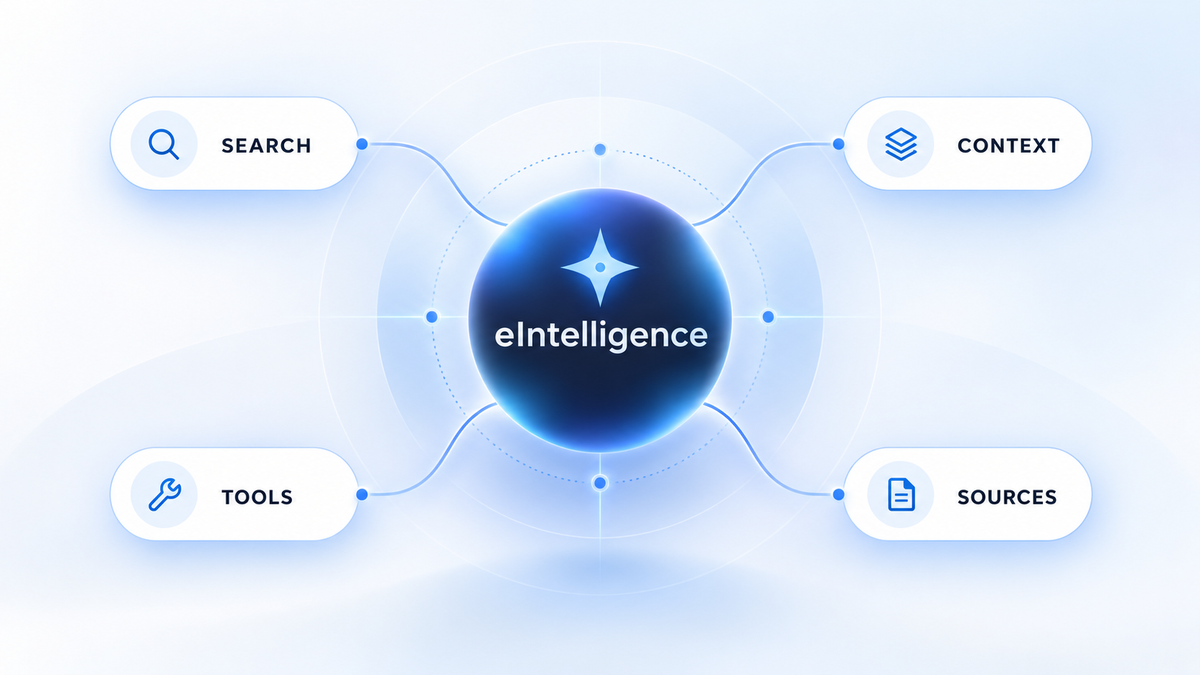
That means treating intelligence as a capability inside products, not a personality that needs to announce itself every six seconds.
Find the file. Translate the sentence. Summarize the thread. Suggest the next useful step.
When the answer depends on a source, make the source reachable. Confidence is a tone of voice, not proof.
Personal context can be powerful. It can also be personal. Permission is part of the product.
Good assistance should be easy to ignore. Nobody needs to wrestle with software to remain in charge.
Search has different needs from Mail. Mail has different permissions from eDrive. Maps has different tools from Translate. eIntelligence is the architectural direction for sharing capabilities without flattening every product into the same experience.
Personal context should be useful only when the person has chosen to provide it. eDrive explores how files, photos and documents can become searchable without pretending permission is a footnote.
Explore personal AI →Good answers require retrieval, ranking, source quality and the humility to show where information came from.
Explore search intelligence →AI does not reduce the importance of access controls. It increases it. The system needs to know not only what could help, but what it is allowed to use.
Explore privacy + security →The goal is not to make AI the most visible thing on the page. The goal is to make the person more capable when they need it.